


The deposit is the first big hurdle for most Australians looking to buy a home. You’ve probably heard the “20% rule” — but in 2026, that’s not the full picture. There are more options available than ever before, and understanding them could help you buy years sooner than you think.
The 20% Benchmark: Where Does It Come From?
The traditional advice has always been to save a 20% deposit before buying. On a $700,000 property in Queensland, that means $140,000 saved before you even factor in stamp duty and other upfront costs.
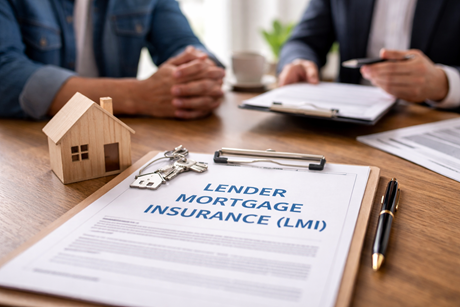
The reason lenders set 20% as the benchmark is risk. When you borrow more than 80% of a property’s value — known as an 80% Loan-to-Value Ratio (LVR) — lenders consider the loan higher risk. They manage that risk by requiring you to pay Lenders Mortgage Insurance (LMI), which protects the lender (not you) if you default.
| 💡 Key Insight: A 20% deposit means you borrow 80% of the property value — and pay no LMI. But it’s far from your only option. |
|---|
Can You Buy With Less Than 20%?
Yes — and many Australians do. Here’s a breakdown of the most common deposit scenarios:
| Deposit Size | LVR | LMI Required? | Notes |
|---|---|---|---|
| 5% | 95% | Yes (unless scheme) | First Home Guarantee exempts LMI |
| 10% | 90% | Yes | Reduced LMI vs 5% |
| 15% | 85% | Yes | LMI significantly lower |
| 20%+ | 80% or less | No | Standard benchmark |
Use our Borrowing Power Calculator to see what you could borrow based on your income and deposit size.
What Is LMI and How Much Does It Cost?
Lenders Mortgage Insurance (LMI) is a one-off premium charged when your deposit is less than 20%. It’s important to understand that LMI protects the lender, not you — but it does allow you to buy sooner with a smaller deposit.
LMI costs vary depending on the loan amount and LVR, but as a rough guide:
On a $650,000 loan at 95% LVR, LMI can be $20,000–$28,000
On a $650,000 loan at 90% LVR, LMI is typically $10,000–$15,000
LMI can usually be added (capitalised) onto your loan — so you don’t pay it upfront
Estimate your LMI costs using the calculator below.
🔒 LMI Estimator
Government Schemes That Reduce the Deposit You Need
In 2026, Australian first home buyers have access to several government-backed schemes that either eliminate LMI or reduce the effective deposit needed:
1. First Home Guarantee (Federal)
Allows eligible buyers to purchase with just a 5% deposit — with no LMI payable. The government guarantees the remaining 15%, effectively acting as your co-guarantor with the lender. Places are limited each financial year.
2. First Home Owner Grant (State-Based)
A cash payment from your state government — in Queensland, this is up to $30,000 for new builds. This can contribute directly to your deposit, helping you reach your target sooner.
3. First Home Super Saver Scheme (FHSS)
Allows you to save for your deposit inside your superannuation fund at concessional tax rates — potentially saving thousands compared to saving in a regular bank account. You can withdraw up to $50,000 in total under this scheme.
| 📌 These schemes can be combined — for example, using the FHSS to save your deposit, the First Home Guarantee to avoid LMI, and the FHOG to boost your overall funds. |
|---|
Victorian buyers should also read our full guide on First Home Buyer grants in Victoria — it covers the FHOG, stamp duty concessions, the First Home Guarantee, and the Victorian Homebuyer Fund in detail.
The Costs Beyond the Deposit
Your deposit is just one part of the upfront cost of buying. Before you set a savings target, make sure you account for:
— varies significantly by state and whether you’re a first home buyer (may be exempt in QLD on properties under $700,000 for first home buyers buying a new build) Stamp duty
— typically $1,500–$3,000 Conveyancing/legal fees
— $400–$800 Building and pest inspection
— varies by lender, some charge none Loan application fees
— $500–$3,000 depending on distance Moving costs
— minor, but factor them in Mortgage registration fees
Use our Budget Planner to map out your full upfront cost picture before you start saving.
Use our Budget Planner below to map out your total upfront costs including stamp duty, conveyancing, and inspections.
📊 Budget Planner
How to Save Your Deposit Faster
If you’re in savings mode, these strategies can help you hit your target sooner:
Open a high-interest savings account specifically for your deposit fund
Use the First Home Super Saver Scheme to save pre-tax dollars
Consider a guarantor loan using a parent’s property as security — this can allow you to buy with no deposit
Reduce visible debts and credit card limits before applying — they affect your borrowing capacity
Automate a fixed amount into savings each payday before you spend anything else
Frequently Asked Questions
Yes. Through the Federal Government’s First Home Guarantee, eligible buyers can purchase with just 5% deposit and avoid LMI entirely. Income and property price caps apply. A broker can confirm whether you qualify.
Most lenders require that at least a portion of your deposit be “genuine savings” — typically money held in an account for at least 3 months. Gifts, grants, and government payments may be accepted by some lenders but not others.
Yes — the FHOG is paid at settlement and can form part of your deposit. However, lenders typically want to see genuine savings of at least 5% separately from any grant amounts.
Investment properties generally require a minimum 10% deposit, and LMI applies above 80% LVR. Most lenders cap investment lending at 90% LVR. A broker can help you structure your borrowing to minimise costs.
At Australia’s median property prices in 2026, saving a 20% deposit can take 7–10 years for average income earners in major cities. This is why most first home buyers explore the 5–10% deposit options with government scheme assistance.


Leave a Reply